
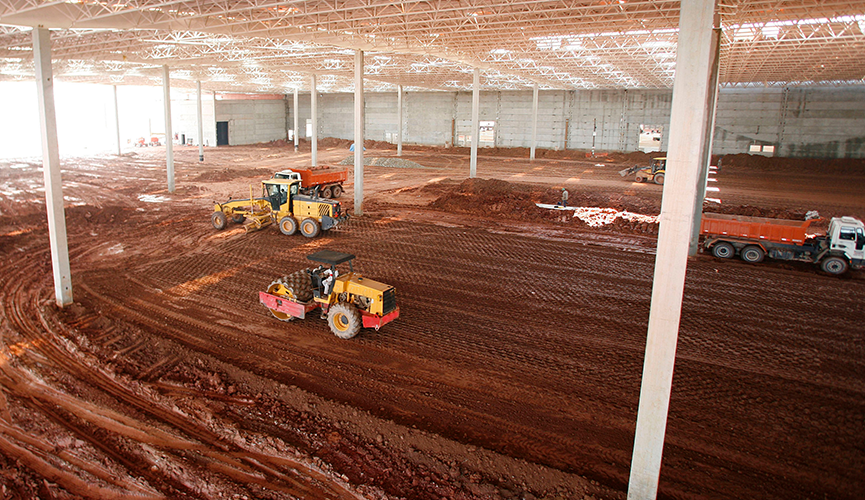
Building a safe, long-lasting space for horses takes more than clearing land and adding sand. The construction of horse arena requires planning, the right materials, and skilled work on site.
Many property owners rush the process and end up with drainage issues, uneven surfaces, or footings that do not hold up. This guide explains what matters most, from sizing to ground preparation, so your arena works well from day one.
What Is Horse Arena Construction?
Horse arena construction is the full process of creating a controlled surface for riding and training. It includes earthworks, drainage, base layers, and the final riding surface. A well-built equestrian riding arena supports both horse and rider, reduces injury risk, and performs well in all weather.
There are different types of riding arenas, including each outdoor arena and indoor arenas. Outdoor builds are common on rural land, while indoor builds suit all-weather training. No matter the type, the same basics apply. You need a stable base, proper slope, and durable arena footing.
This is why working with experienced horse arena builders or equestrian arena builders matters. They understand soil behavior, water flow, and how horses move on different surfaces.
Choosing the Right Horse Arena Dimensions
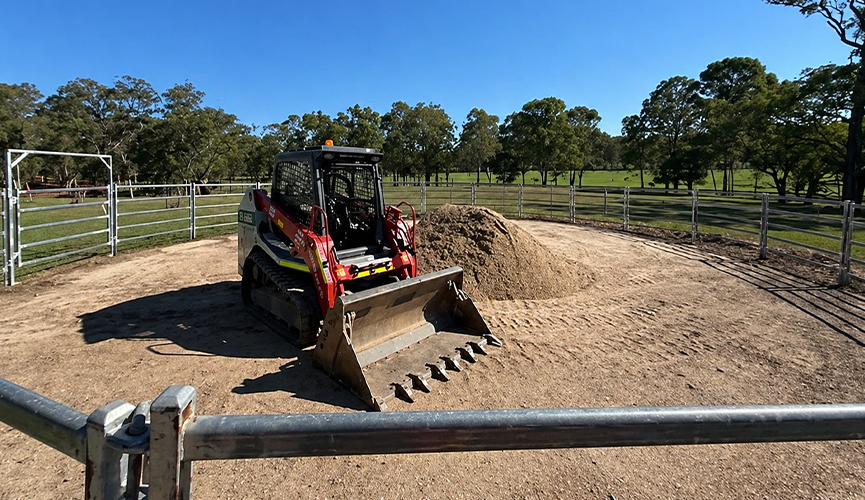
Getting the size right is one of the first steps in equestrian facility construction. The horse arena dimensions depend on how you plan to use the space. Training, schooling, and competition all need different layouts.
For dressage, there are standard sizes used across the industry. The standard dressage arena is usually 20m x 60m, which equals 20 meters wide and 60 meters long. These dressage arena dimensions allow for full tests and proper movement along the long sides.
Some smaller properties use a 20 meters by 40 meters setup. While not ideal for all events, it still works for basic training. When planning measurements for dressage arena, always think about rider flow, turning space, and safe margins around the edges.
Other disciplines may need different horse arena measurements. Jumping arenas often require more width, while casual horse riding arena setups can be more flexible.
Planning and Site Preparation
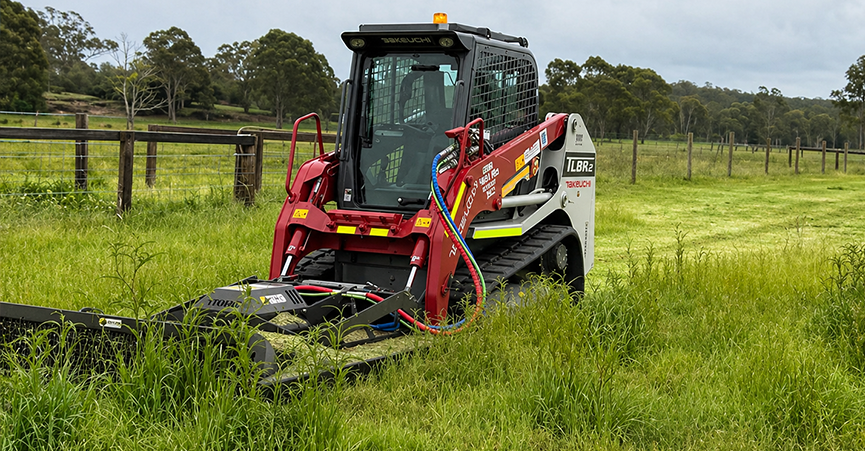
Before starting any equine arena construction, you need to assess the land. This step is often overlooked, but it can make or break the project. Key factors include:
- Soil type and stability
- Natural slope and water flow
- Access for machinery
- Space for drainage systems
Clearing and leveling are part of horse ménage construction. The goal is to create a consistent base before adding layers. This is where tools like laser grading come in. Laser grading ensures the surface is even and drains correctly, which prevents water pooling and surface damage.
Proper planning also includes Council Permits and DA Approval. Local rules may affect where and how you build your equestrian arena, especially in residential or semi-rural areas. Skipping approvals can delay the project or lead to fines.
Base Layers and Drainage
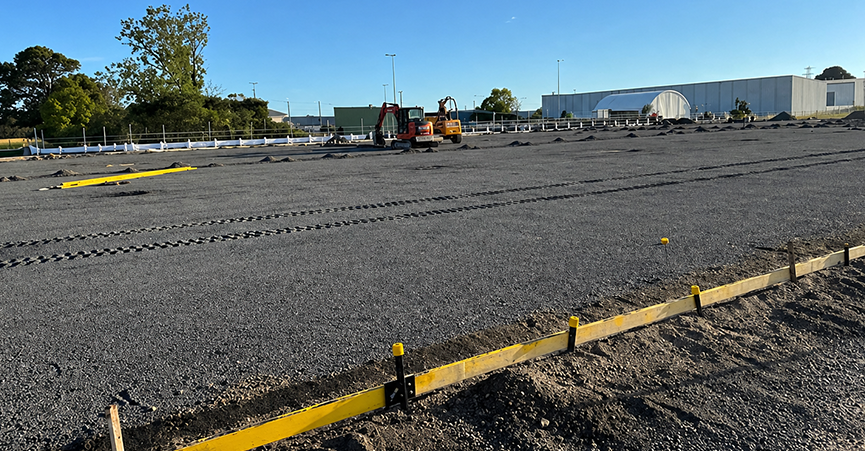
A strong base is the backbone of any equine arena construction. Without it, the surface will shift, compact unevenly, or wash away over time. The base usually includes:
- Subgrade preparation
- Compacted gravel or crushed rock
- Drainage pipes or channels
Drainage is critical. Water must move away from the surface quickly. If not, even a high-quality top layer will fail. Poor drainage leads to muddy spots, hard patches, and unsafe footing.
Professional horse arena builders focus heavily on this stage. It is not visible once complete, but it defines how long your horse arena lasts.
Arena Footing and Surface Materials
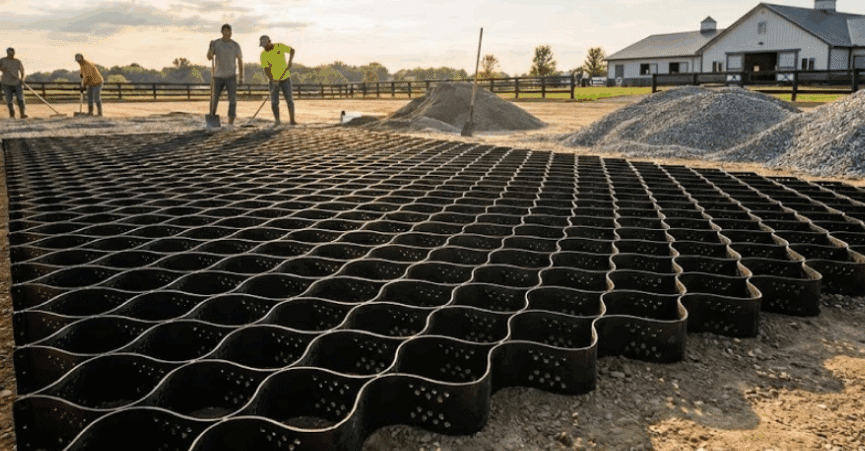
The top layer, or arena footing, is where horses perform. It must be soft enough to absorb impact but firm enough to provide support.
Common materials include:
- Sand blends
- Synthetic mixes
- Fiber additives
Each option suits different uses. Dressage often prefers consistent sand mixes, while jumping may need more grip. The right choice depends on your discipline and maintenance plan.
For dressage arena construction equestrian arena builders focus on even texture and depth. Uneven footing can affect movement and training results. A well-built horse arena balances all layers, not just the surface. Good footing only works if the base underneath is stable.
Indoor vs Outdoor Arena
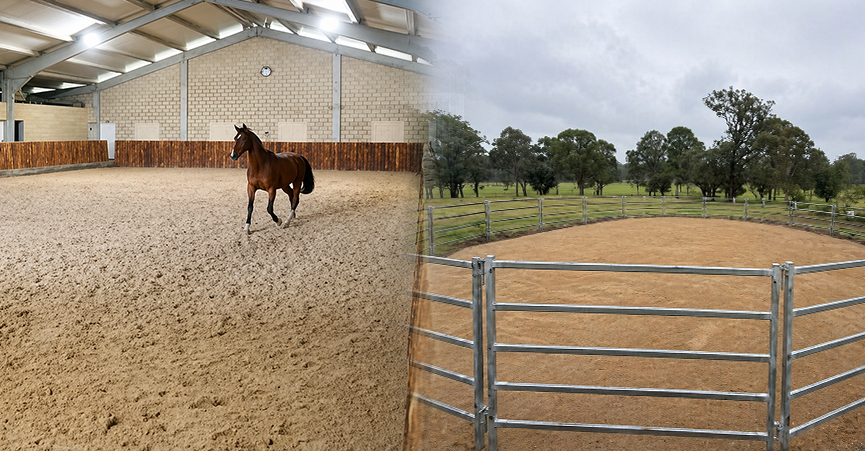
Choosing between an indoor arena and an outdoor arena depends on budget, climate, and usage.
Outdoor Arena
- Lower cost to build
- Natural light and airflow
- Requires weather management
Indoor Arena
- Year-round use
- Protection from rain and sun
- Higher upfront investment
Both types follow similar steps in horse arena construction, but indoor builds need additional structure and design planning.
Common Mistakes to Avoid
Many issues in arena construction come from rushed decisions or cutting corners. Avoid these common mistakes:
- Skipping proper drainage planning
- Choosing cheap materials over durability
- Ignoring the correct arena size for your discipline
- Not using laser grading for leveling
- Building without approvals, like DA Approval
These mistakes often lead to higher repair costs later. A well-planned equestrian arena saves time and money in the long run.
Cost Factors in Horse Arena Construction
The cost of horse arena construction varies based on several factors. Understanding these helps you plan better and avoid surprises.
Key cost drivers include:
- Size and arena dimensions
- Site conditions and earthworks required
- Type of arena footing
- Drainage system complexity
- Choice of materials
Larger spaces, like a full 20m x 60m setup, naturally cost more than smaller builds. Difficult ground conditions also increase labor and material needs. Working with experienced horse arena builders helps you balance cost and quality. They can recommend solutions that match your budget without compromising performance.
While budgeting for the arena build itself, many property owners also need to factor in overall site aesthetics and external finishes; if you are looking to revamp the surrounding acreage, it helps to understand how much does landscaping cost for large-scale earthmoving and rural properties.
Why Black Rock Earth Work Is the Best Choice for Professional Arena Builders
While some property owners attempt DIY builds, working with Black Rock Earth Work gives you the advantage of real experience on the ground. As trusted equestrian arena builders specializing in high-quality earthworks Sydney projects, the team understands every stage of equine arena construction, from preparing the soil to finishing the final riding surface.
Black Rock Earth Work focuses on doing the job right the first time. Every horse arena is built with attention to detail, ensuring it performs well in daily use and holds up over time.
Benefits include:
- Accurate leveling using laser grading
- Proper drainage design to avoid water issues
- Access to high-quality materials that last
- Faster and more efficient build time
A professionally built horse riding arena by Black Rock Earth Work performs better, feels more consistent underfoot, and requires less ongoing maintenance. It is a practical choice for property owners who want reliability without the guesswork.
Final Thoughts
The construction of horse arena is an investment in safety, performance, and long-term value. From choosing the right horse arena dimensions to installing proper drainage and footing, every step matters.
Whether you are planning dressage arenas, a casual training space, or a full equestrian arena, the key is to focus on quality and planning. A well-built arena supports better riding, protects your horses, and holds up under daily use.
If you are considering horse arena construction, working with experienced professionals like Black Rock Earth Work ensures the job is done right from the ground up. Their practical approach and proven experience make a real difference in the final result.
FAQs
What is the ideal size for a horse arena?
The ideal horse arena size depends on use, but 20m x 60m suits most dressage arenas.
How long does horse arena construction take?
Most horse arena construction projects take two to four weeks, depending on size and site conditions.
Do I need Council Permits or DA Approval?
Yes, many projects require Council Permits or DA Approval, depending on location, zoning, and project scope.
What is the best footing for a horse arena?
The best arena footing depends on discipline, but sand blends with additives offer balance and durability.
Why is drainage important in equine arena construction?
Good drainage prevents water buildup, protects the surface, and keeps the horse arena safe year-round.