
What Is the Average Excavation Cost in Sydney?
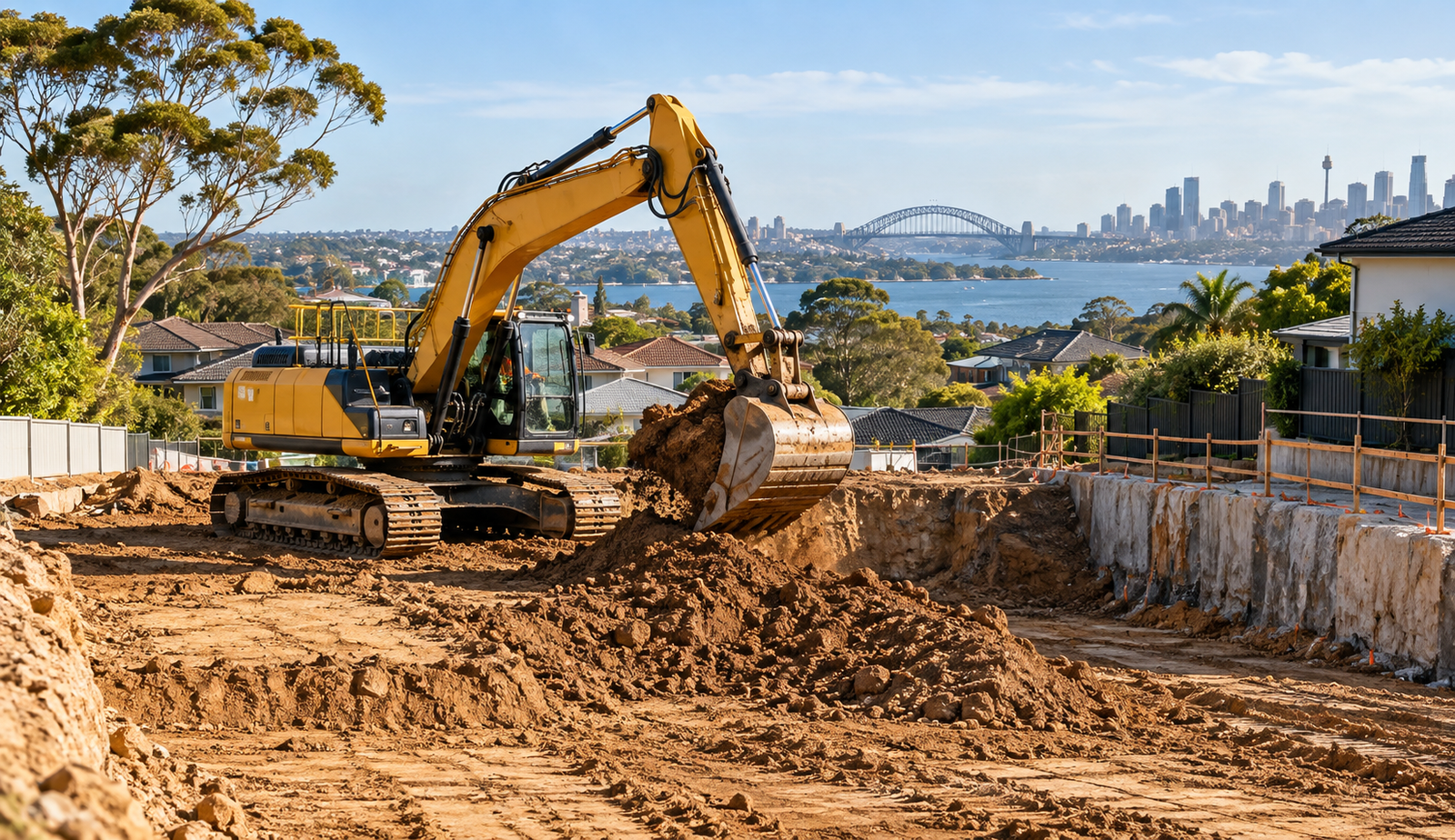
The average excavation cost in Sydney depends on the amount of material being removed, the machinery required, and how easily contractors can access the property.
For standard excavation, contractors may charge by the hour, cubic metre, or total project scope.
The following table provides indicative excavation pricing for Sydney and surrounding NSW regions.
| Excavation Type | Estimated Cost (AUD) | Pricing Method |
| General soil excavation | 40–80 | Per m³ |
| Clay and mixed soil excavation | 70–120 | Per m³ |
| Soft rock excavation | 100–250 | Per m³ |
| Hard rock excavation | 150–400+ | Per m³ |
| Mini excavator with operator | 90–150 | Per hour |
| Medium excavator with operator | 120–180 | Per hour |
| Large excavator with operator | 180–250+ | Per hour |
| Residential site excavation | 10,000–40,000+ | Per project |
These figures are indicative 2026 market estimates, not BlackRock Earthworks’ quoted rates. GST treatment, machinery transport, spoil disposal, and additional services vary between quotations.
For reliable budgeting, obtaining a site-specific quotation from an experienced Sydney earthworks contractor is recommended.
Excavation Cost Per Cubic Metre Explained
Calculating excavation cost per cubic metre (m³) is one of the most common methods used for larger construction and earthmoving projects.
A cubic metre represents the volume of material being excavated. Contractors calculate this using the length, width, and depth of the area.
How to Calculate Excavation Volume
The basic formula is:
Excavation Volume (m³) = Length × Width × Depth
For example, consider an excavation measuring:
- Length: 10 metres
- Width: 5 metres
- Depth: 1 metre
The excavation volume would be:
10 × 5 × 1 = 50 cubic metres
If the excavation rate is $70 per cubic metre, the basic excavation charge would be:
50 × $70 = $3,500
However, this calculation covers only the excavation component at the assumed rate. Transporting machinery, removing excess soil, rock breaking, drainage requirements, and site finishing may add to the final amount.
Excavated soil also expands when loosened, meaning the volume transported for disposal may exceed the original in-ground measurement.
Key Factors That Affect Excavation Costs
Several factors influence excavation pricing across Greater Sydney. Understanding these conditions helps homeowners and developers prepare more realistic budgets.
1. Soil Type and Ground Conditions
Soil composition has a significant effect on excavation efficiency.
Loose soil and sandy ground are generally easier to excavate, while compacted clay, shale, and sandstone require additional machinery time.
Sydney’s varied geology means contractors may encounter multiple ground conditions within the same project.
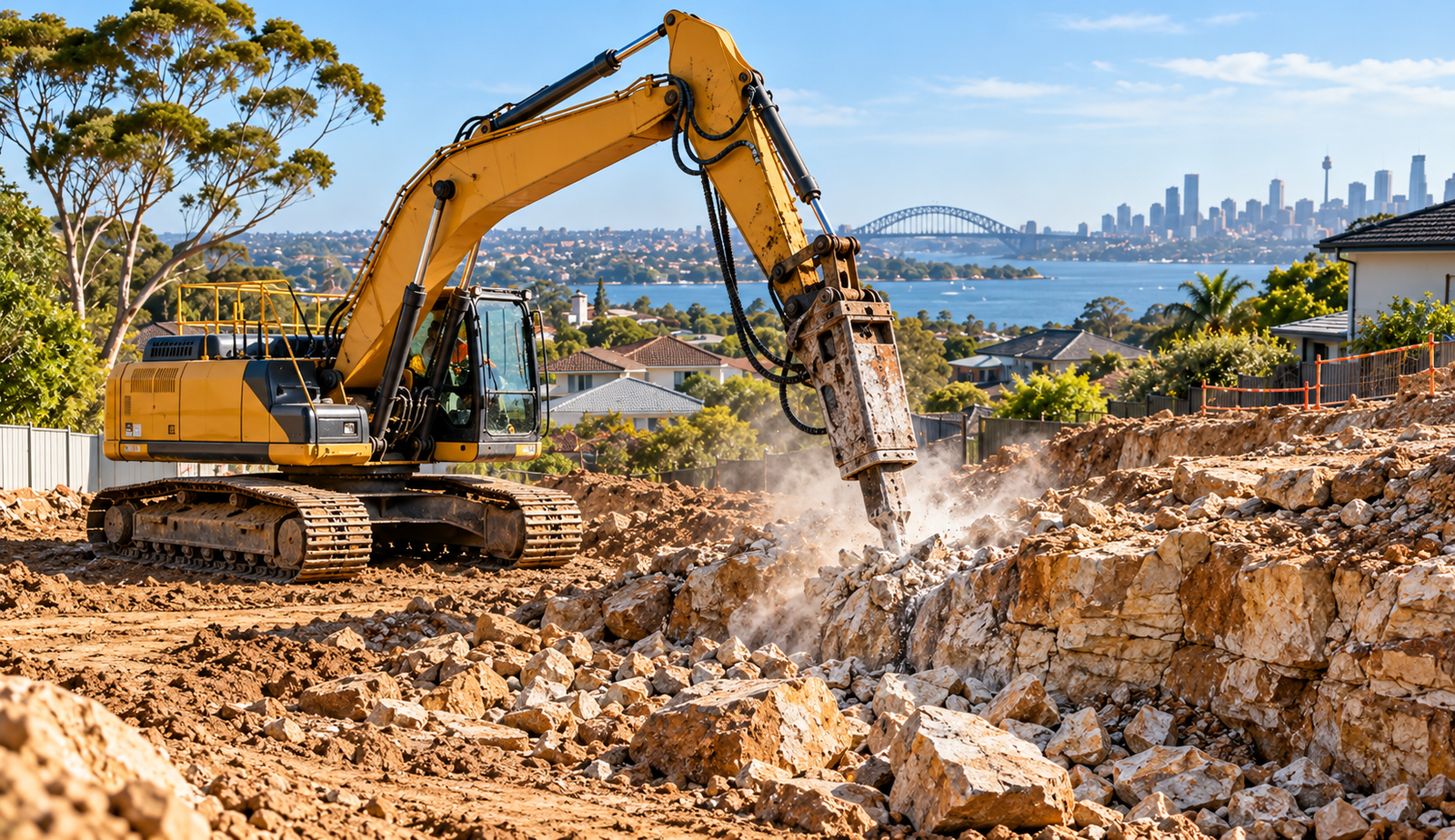
Rock excavation is particularly expensive because specialised hydraulic breakers, rock saws, or heavier excavators may be necessary.
2. Site Accessibility
Properties with wide driveways and unrestricted access generally allow contractors to operate larger, more efficient machinery.
In contrast, narrow residential blocks, steep driveways, restricted side access, and established landscaping can increase excavation cost.
A smaller excavator may be required to access confined spaces, potentially extending the overall project duration.
3. Excavation Size and Depth
Larger excavation areas require additional digging, loading, transport, and disposal.
Excavation depth is equally important. Deep foundations, basements, and retaining wall excavations may require engineered excavation methods, temporary support, or additional safety measures.
These requirements can significantly increase the final project price.
4. Machinery and Labour Requirements
Excavation contractors select machinery based on the size and complexity of the job.
Mini excavators are suitable for smaller residential work, while larger machines are generally used for bulk excavation, commercial construction, and major site preparation.
Operator experience, supporting labour, and additional equipment also affect the overall excavation budget.
5. Soil Removal and Disposal
Excavation often produces excess soil and rubble that must be transported away from the property.
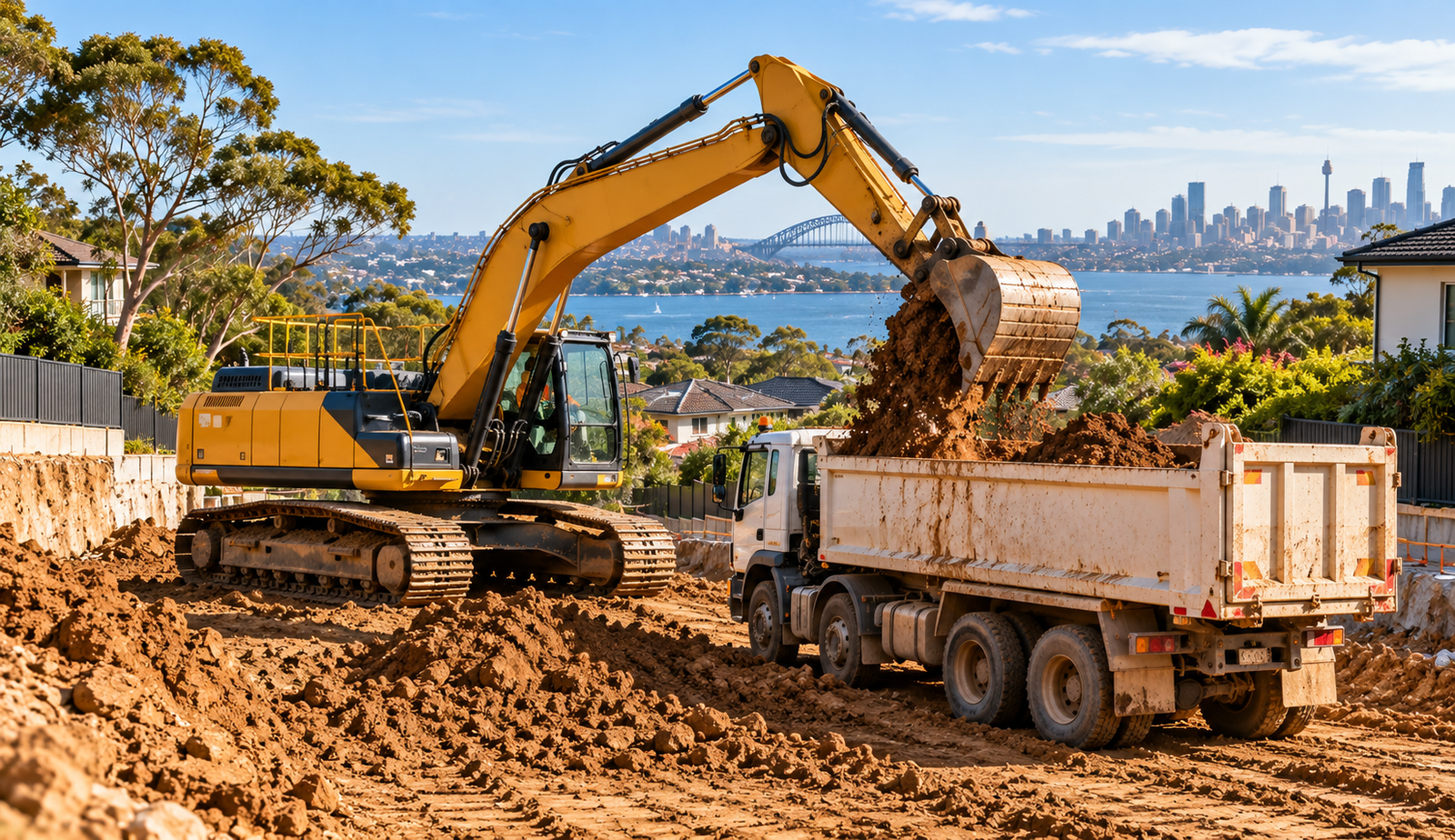
Tipper trucks, disposal facility charges, travel distances, and material classification all affect removal costs.
Where appropriate and permitted, reusing suitable excavated material on-site can reduce expenses.
Excavation Cost for Different Project Types
The purpose of your project plays a major role in determining excavation expenses.
Residential Site Excavation Cost
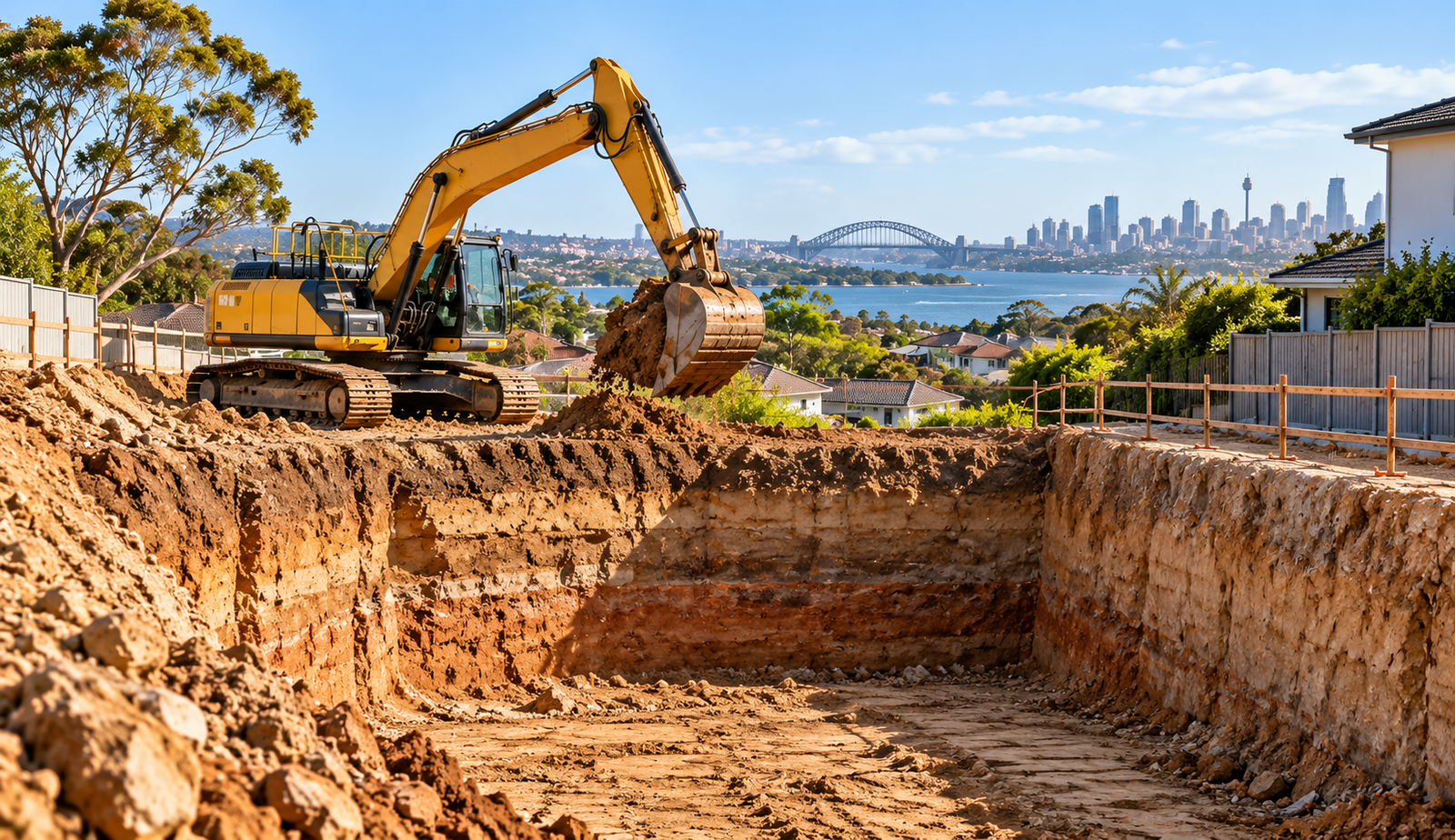
Preparing land for a new home may involve removing vegetation, cutting and filling soil, levelling the building footprint, and preparing foundation areas.
Residential excavation cost can range from approximately $10,000 to $40,000 or more for substantial site cuts, depending on the slope, soil conditions, excavation volume, and access.
Sloping properties generally require more detailed planning than relatively flat sites.
Swimming Pool Excavation Cost
Swimming pool excavation involves removing soil to create the required pool dimensions and depth.
Costs vary according to pool size, machinery access, soil conditions, and whether rock is encountered.
Additional excavation may also be necessary for plumbing, filtration equipment, and surrounding landscaping.
For an accurate pool excavation estimate, contractors should assess the proposed pool location and site conditions before work begins.
Driveway Excavation Cost
Driveway excavation usually involves removing existing surfaces, preparing the subgrade, and achieving the required levels for drainage and construction.
Costs depend on driveway dimensions, excavation depth, ground stability, and whether existing concrete or asphalt must be removed.
Proper excavation helps create a stable base for the new driveway.
Retaining Wall Excavation Cost
Retaining wall projects often require excavation for footings, drainage, and structural support.
The excavation cost depends on the wall’s dimensions, soil characteristics, site slope, and engineering requirements.
On difficult sites, rock removal and restricted machinery access may increase project expenses.
Additional Excavation Expenses to Consider
When comparing excavation quotations, it’s important to understand which services are included.
Machinery Transportation
Excavators and earthmoving equipment often require specialist transport to reach the worksite.
Float transportation costs depend on machine weight, distance, and site location.
Rock Breaking and Removal
Unexpected sandstone or hard rock can significantly increase excavation expenses.
Specialised attachments, additional labour hours, and rock disposal may be required.
Drainage and Groundwater
Sites affected by groundwater, poor drainage, or unstable soil may need additional excavation support or water management.
These requirements should be assessed before construction begins.
Permits and Site Safety
Depending on the project, council approvals, engineering documentation, service locating, and excavation safety measures may be necessary.
Before digging, underground utilities should be checked through Before You Dig Australia, with additional locating work arranged where required.
How to Reduce Excavation Costs in Sydney
Although excavation expenses depend heavily on site conditions, careful preparation can help minimise unnecessary spending.
Plan the entire project before excavation begins. Confirm dimensions, finished ground levels, access requirements, and soil removal arrangements to avoid repeated machinery bookings.
Combine excavation tasks where practical. Scheduling site preparation, trenching, driveway excavation, and landscaping earthworks together can reduce equipment transportation expenses.
Arrange a professional site assessment. Identifying restricted access, difficult soil conditions, and potential rock early allows contractors to recommend suitable machinery and excavation methods.
Consider material reuse. Suitable excavated soil may sometimes be reused for approved filling or landscaping, reducing disposal charges.
Compare complete quotations rather than hourly rates alone. A lower machinery rate does not necessarily produce a lower overall project cost if the work takes longer.
Experienced excavation contractors can help identify efficient approaches without compromising safety or construction requirements.
Why Choose BlackRock Earthworks for Excavation in Sydney?
Choosing the right excavation contractor is just as important as understanding the cost.
At BlackRock Earthworks, we provide professional earthmoving and excavation services across Greater Sydney, the Hawkesbury, and Central West NSW.
Our services include residential and commercial excavation, site preparation, land clearing, bulk earthworks, driveway preparation, and retaining wall earthworks.
We understand that every property presents different requirements, from straightforward residential projects to challenging terrain and larger construction sites.
Our focus is on delivering practical earthmoving solutions, dependable communication, and quality workmanship tailored to each project.
Whether you’re planning a new home, preparing a building site, or developing an outdoor space, our team can help you understand the excavation requirements and associated costs.
Planning an excavation project? Contact BlackRock Earthworks for a personalised quotation and professional advice on your next project.
Frequently Asked Questions About Excavation Cost
How much does excavation cost per cubic metre in Sydney?
General soil excavation commonly ranges from approximately $40 to $80 per cubic metre, while clay, mixed ground, and rock excavation can cost substantially more. Final pricing depends on site conditions, equipment, and disposal requirements.
How much does residential excavation cost?
Residential excavation cost varies according to the scope of work. Small projects may cost hundreds or a few thousand dollars, while substantial residential site cuts can exceed 10,000–40,000.
Is rock excavation more expensive than soil excavation?
Yes. Rock excavation typically costs more because it requires specialised equipment, additional operating time, and more intensive material handling. Hard sandstone can significantly increase excavation expenses.
How much does it cost to hire an excavator with an operator?
In Sydney, excavator hire with an experienced operator commonly ranges from around $90 to $250 per hour, depending on machinery size. Larger specialist machines may cost more. For a detailed comparison, read our 2026 Excavator Hire Cost Guide.
Does excavation cost include soil removal?
Not always. Some contractors include loading, transport, and disposal in their quotations, while others charge these services separately. Always confirm the quotation inclusions before approving the project.
How can I get an accurate excavation quote?
The best approach is to provide your contractor with site dimensions, project plans, access details, proposed excavation depth, and any available soil or engineering reports.
Ready to Get Your Excavation Project Underway?
Understanding excavation cost helps you make informed decisions, plan effectively, and avoid unexpected construction expenses.
Whether you need residential site excavation, bulk earthmoving, land clearing, or retaining wall preparation, BlackRock Earthworks is ready to assist.