
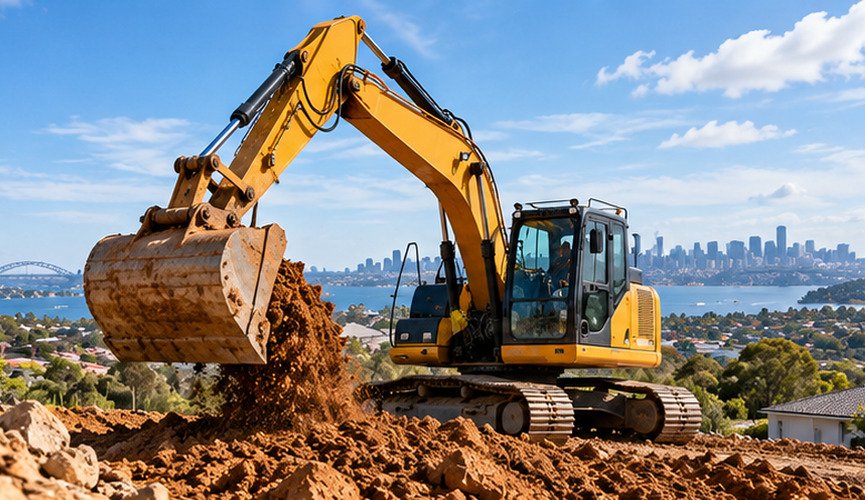
Why Choosing the Right Earthworks Contractor Matters
A professional earthworks contractor does much more than operate an excavator.
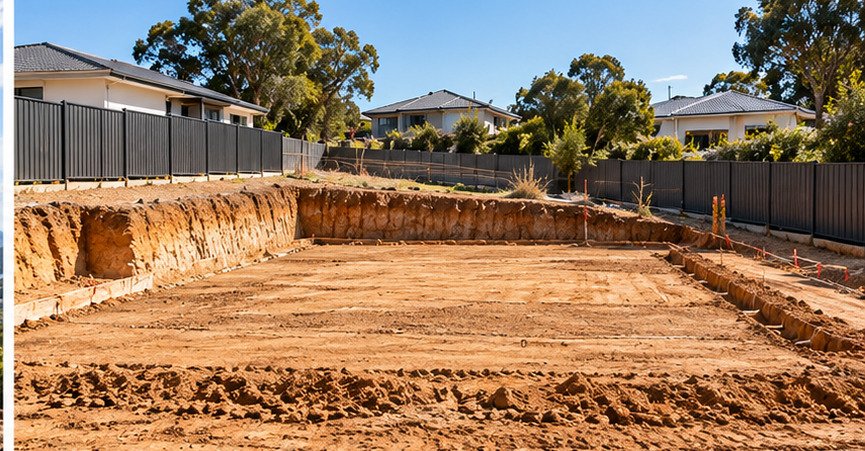
Earthworks involve preparing land to the required dimensions, levels and conditions for construction. Depending on the project, this may include clearing vegetation, removing soil and rock, excavating foundations, compacting fill and managing drainage.
Experienced contractors understand how these activities affect the surrounding property and subsequent construction stages.
Choosing the wrong contractor can result in:
- Incorrect excavation depths or finished ground levels.
- Unexpected additional costs and project delays.
- Damage to underground services or neighbouring structures.
- Poor drainage and unstable ground conditions.
- Inadequate soil removal or disposal arrangements.
- Safety concerns and potential regulatory issues.
By selecting a qualified contractor with suitable experience, you can reduce these risks and establish a stronger foundation for your project.
1. Check the Contractor’s Experience and Track Record
Experience should be one of the first considerations when comparing earthworks contractors in Sydney.
Earthmoving projects require practical knowledge of machinery, soil conditions, excavation techniques and construction sequencing.
However, experience alone isn’t enough. The contractor should have completed projects similar to yours.
Residential Earthworks Experience
For homeowners, relevant experience may include house pad preparation, driveway excavation, swimming pool excavation, retaining wall footings and residential site levelling.
Contractors familiar with residential projects should understand working around existing homes, fences, services and restricted access points.
Commercial and Bulk Earthworks Experience
Larger construction sites often require heavier machinery, coordinated material transport, engineered excavation and careful scheduling.
If you’re planning a substantial development, ask whether the contractor has managed similar bulk earthworks projects.
Review Previous Projects
Before hiring, request examples of completed work.
Project photographs, case studies and genuine customer feedback can help you assess the contractor’s workmanship, reliability and attention to detail.
A strong track record provides greater confidence than promotional promises alone.
2. Make Sure the Earthworks Contractor Has the Right Equipment
The machinery used can significantly affect project efficiency, cost and overall results.
Professional earthworks contractors should select equipment according to the scope of work rather than relying on one machine for every project.
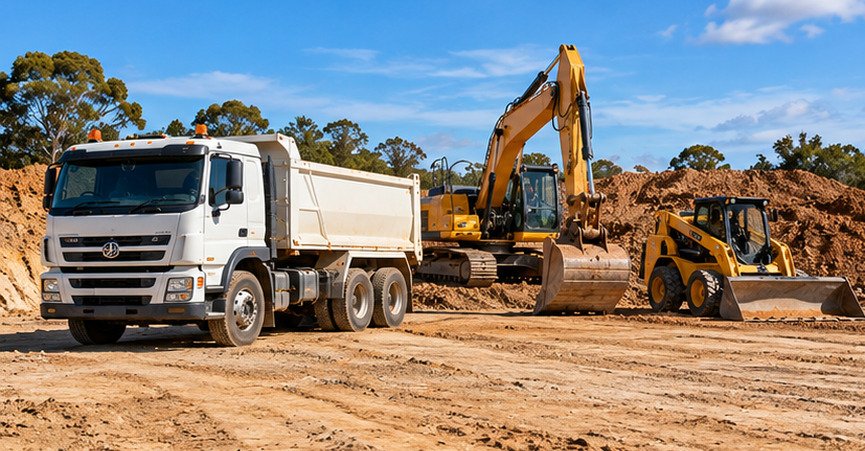
Different types of earthmoving equipment serve different purposes.
| Equipment | Common Applications |
| Mini excavators | Restricted residential access, trenching and small excavations |
| Medium excavators | Driveways, house pads, pool excavation and retaining walls |
| Large excavators | Bulk earthworks, major site cuts and commercial excavation |
| Skid steer loaders | Site clearing, grading and material movement |
| Tipper trucks | Soil, rock and construction material transport |
| Hydraulic rock breakers | Sandstone, hard rock and concrete removal |
| Compaction equipment | Preparing stable fill and construction surfaces |
A contractor with access to appropriate, well-maintained machinery can often complete tasks more efficiently.
Before accepting a quotation, ask what equipment will be used, whether specialist attachments are required and how machinery will access the site.
3. Look for Local Knowledge of Sydney Ground Conditions
Sydney’s varied landscape creates unique challenges for excavation and earthmoving projects.
An experienced local earthworks contractor in Sydney should understand the different soil profiles, terrain conditions and access restrictions commonly encountered throughout the region.
Sandstone and Rock Excavation
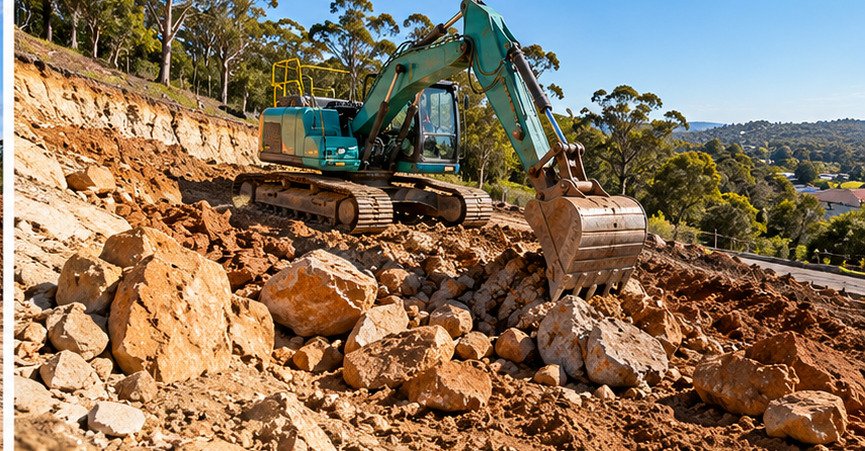
Many Sydney properties contain sandstone or other rock formations.
Rock excavation may require hydraulic breakers, rock saws or specialised excavation techniques.
Contractors should identify potential rock-related challenges early and explain how these conditions could affect pricing and timelines.
Clay Soil and Drainage
Clay-rich soil can become difficult to work with during wet weather and may require particular attention to moisture, compaction and drainage.
A knowledgeable contractor can coordinate the earthworks with the project’s geotechnical and engineering requirements.
Sloping Blocks and Restricted Access
Properties in the Hawkesbury, Blue Mountains and other hilly areas may require careful machinery positioning, staged excavation and additional stability considerations.
Similarly, densely developed suburbs may have narrow access routes, neighbouring buildings and limited space for storing excavated material.
Local experience helps contractors anticipate these challenges before work begins.
4. Verify Insurance, Qualifications and Safety Procedures
Safety should never be treated as an optional extra when selecting an excavation or earthworks contractor.
Earthmoving involves heavy machinery, excavation hazards, underground services and potentially unstable ground.
Before hiring, ask for evidence of relevant qualifications, competencies and insurance coverage.
Insurance and Operator Competency
Depending on the work, important considerations include:
- Public liability insurance appropriate to the project.
- Workers compensation coverage where required.
- Relevant machinery operator training and competency.
- Applicable contractor licences for regulated work.
- Appropriate construction site induction requirements.
Not every earthworks activity requires the same licence, so confirm the requirements that apply to your particular project.
Safe Work Method Statements
For high-risk construction work, contractors must prepare and implement suitable Safe Work Method Statements (SWMS).
Excavation involving trenches or particular site hazards may require additional safety controls.
A reputable contractor should be able to explain their safety procedures, machinery inspections, site access arrangements and emergency planning.
Underground Services and Site Protection
Before excavation starts, existing underground services should be identified and assessed.
Before You Dig Australia provides information to support underground asset enquiries, although additional on-site locating may be necessary.
A responsible contractor will also consider neighbouring structures, site boundaries, erosion controls and public safety.
5. Compare Detailed Earthworks Contractor Quotes
Price is important, but the lowest quotation isn’t necessarily the best value.
When comparing earthmoving contractors in Sydney, look at the complete scope of work rather than focusing only on hourly machinery rates.
A detailed quotation should clearly explain what is included and identify potential additional expenses.
What Should an Earthworks Quote Include?
| Quotation Item | What to Check |
| Scope of work | Excavation dimensions, depths and required finished levels |
| Equipment | Machinery type, attachments and operator arrangements |
| Labour | Estimated working hours and additional personnel |
| Site preparation | Clearing, demolition or access work included |
| Material disposal | Loading, transport and tipping fees |
| Rock excavation | Allowances and rates for unexpected rock |
| Transportation | Machinery delivery and removal costs |
| Timeline | Proposed start date and estimated duration |
| GST | Whether prices include or exclude GST |
| Variations | How unexpected conditions and additional work are priced |
For further information about machinery rates, read our 2026 Excavator Hire Cost Guide.
Watch for Unclear Pricing
Be cautious of quotations that exclude important services without explanation.
For example, an excavation estimate may appear affordable initially but become considerably more expensive when soil disposal, machinery transport or rock breaking is added.
An experienced contractor should explain these possibilities before work begins.
6. Assess Communication and Project Management
Clear communication is an important sign of a reliable earthworks contractor.
Construction projects frequently involve homeowners, builders, engineers, surveyors and other trades. Poor communication between these parties can cause delays, rework and unnecessary costs.
Before hiring, consider how effectively the contractor answers your questions.
A dependable contractor should:
- Explain the proposed excavation approach clearly.
- Discuss potential site challenges before starting.
- Provide realistic project timelines.
- Clarify quotation inclusions and exclusions.
- Communicate significant changes promptly.
- Coordinate work with relevant construction professionals.
Contractors who take time to understand the project during the quotation stage are better positioned to establish clear expectations.
7. Confirm the Contractor Understands Site Preparation and Drainage
Successful earthworks are not simply about removing material.
The condition of the completed site can affect foundations, driveways, retaining walls and landscaping.
For this reason, site preparation should be planned around the project’s design and engineering requirements.
Correct Excavation Levels
Excavation must achieve the required levels, grades and dimensions.
Incorrect levels can affect foundation construction, surface drainage and connections to surrounding areas.
Soil Compaction and Stability
Where fill placement is required, suitable materials and appropriate compaction methods are essential.
Some projects also require geotechnical testing and verification.
Drainage and Water Management
Site grading should account for how stormwater moves across the property.
Poorly planned drainage can contribute to erosion, pooling water and damage to surrounding structures.
An experienced contractor should recognise when specialist engineering, drainage design or additional testing is necessary.
8. Ask These Questions Before Hiring an Earthworks Contractor
Before making your final decision, arrange a site assessment and ask the shortlisted contractors questions about their approach.
Key questions to ask:
- Have you completed projects similar to mine?
- What machinery will you use for my site?
- Do you have appropriate insurance and operator competencies?
- Is machinery transport included in your quotation?
- How will excess soil and rock be removed?
- What happens if unexpected sandstone or unsuitable ground is discovered?
- How will underground services and nearby structures be protected?
- What is the estimated project duration?
- Who will supervise the work?
- How are additional costs and variations approved?
The answers should help you evaluate professionalism, transparency and practical experience.
A contractor who explains potential challenges clearly is generally more useful than one who promises there will never be complications.
Common Mistakes to Avoid When Choosing an Earthworks Contractor
Homeowners and developers can avoid several common problems by carrying out basic checks before accepting a quotation.
Choosing based only on price: A low quote may exclude important services or underestimate challenging ground conditions.
Not checking previous work: Relevant project experience provides useful evidence of a contractor’s capabilities.
Ignoring soil conditions: Unexpected rock, clay or unstable ground can affect both cost and scheduling.
Failing to clarify disposal costs: Soil removal and transport can represent a significant portion of the earthworks budget.
Overlooking communication: Unclear responsibilities and poorly documented variations can lead to disagreements.
Taking time to compare contractors thoroughly can help protect your budget and project timeline.
Why Choose BlackRock Earthworks in Sydney?
At BlackRock Earthworks, we believe quality earthmoving starts with experience, attention to detail and straightforward communication.
We’re an Australian-owned earthworks company serving Greater Sydney, the Hawkesbury and Central West NSW.
With over 15 years of industry experience and more than 250 completed projects, our team brings practical knowledge to residential, commercial and rural earthworks.
Our services include:
- Residential and commercial excavation.
- Detailed excavation and bulk earthworks.
- Land clearing and site preparation.
- Basement excavation and site cuts.
- Sandstone excavation and retaining walls.
- Material haulage and earthmoving.
- Equestrian arena construction.
- Landscaping and concreting.
Our approach combines practical earthmoving experience with a commitment to safety, reliable workmanship and clear project communication.
From preparing a new house site to managing larger earthmoving requirements, we aim to provide solutions suited to each property’s conditions and construction goals.
We believe in doing things properly, treating your property with respect and delivering honest work—the country way.
Explore BlackRock Earthworks’ services or contact our team to discuss your project.
Frequently Asked Questions About Earthworks Contractors in Sydney
How do I choose a reliable earthworks contractor in Sydney?
Look for relevant project experience, appropriate insurance, competent machinery operators, suitable equipment and detailed written quotations. Reviewing previous projects and customer feedback can also help you make an informed decision.
What services does an earthworks contractor provide?
An earthworks contractor may provide excavation, land clearing, site preparation, soil removal, grading, trenching, bulk earthmoving and retaining wall excavation. Available services vary between companies.
How much does an earthworks contractor cost in Sydney?
Costs depend on machinery requirements, project size, labour, excavation depth, soil conditions and material disposal. Small residential jobs may cost considerably less than major site preparation or commercial earthworks. Request a site-specific quotation for accurate pricing.
Do earthworks contractors need to be licensed in NSW?
Licensing requirements depend on the type of work being undertaken. Certain residential building and related works require appropriate licences, while machinery operators must also meet relevant competency and safety requirements. Check applicable requirements before appointing a contractor.
How long does an earthworks project take?
Small excavation projects may take a day or two, while larger residential or commercial earthworks may require several days or weeks. Project duration depends on site conditions, access, weather, equipment and the scope of work.
Should I get multiple earthworks quotations?
Yes. Comparing detailed quotations helps you understand the proposed scope, equipment, timelines and pricing arrangements. Always assess quality, safety and experience alongside cost.
Ready to Start Your Earthworks Project in Sydney?
Choosing the right earthworks contractor can make a significant difference to the success of your construction project.
From excavation and land clearing to site preparation and bulk earthmoving, experienced professionals help ensure work is planned carefully, completed efficiently and aligned with project requirements.
At BlackRock Earthworks, we’re here to help you get your project moving with practical advice, dependable service and quality workmanship.
Whether you’re preparing a residential block, developing a commercial property or undertaking a rural earthmoving project, we’d be happy to discuss your plans.
Get in touch with BlackRock Earthworks today for a free consultation and project quotation.